
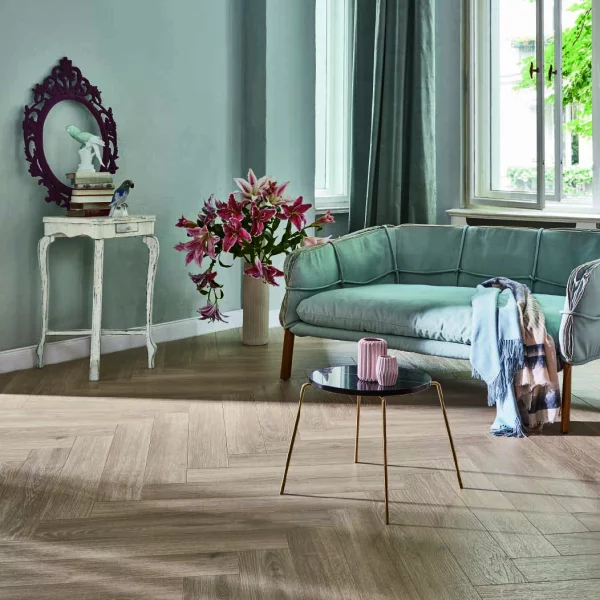
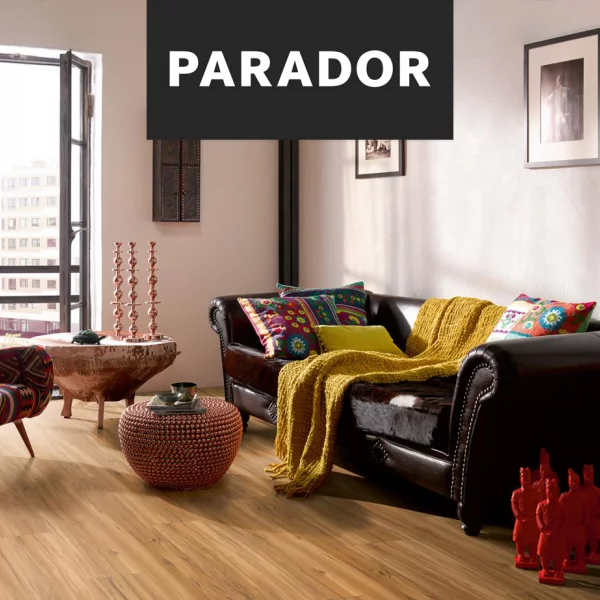






Laminate flooring is very popular; it is known for its durability, affordability and ease of installation. By ‘easy installation’, we mean the floating method. This means the customer does not glue the flooring down, but clicks the planks together using a tongue-and-groove system. This system is found not only in laminate flooring but also in composite flooring.
A floating floor is a sensible choice for DIY enthusiasts and homeowners who wish to modernise their living spaces themselves. One of the critical aspects that is often overlooked is the direction in which the floating floor is laid. Yet the choice is not just about aesthetics, but also about maximising the functional value of the room.

Why direction is important when laying laminate and composite flooring
The direction in which you lay a laminate or composite floor can significantly affect the overall appearance of the room. And the resulting impression it creates. A correctly oriented laminate floor can create an illusion that makes the space appear larger, longer or more inviting. It is not just a matter of visual appeal; the direction can also affect how light falls on the floor.
Let’s start with the basic principle – floorboards are laid parallel to the direction of the light. In this case, the long edge runs in the direction of the light. If you have several windows in a room, the largest one is the deciding factor. The reason is that when light from the windows falls on floorboards laid parallel to it, they appear longer.
In practice, we are often asked whether it is possible to lay the flooring perpendicular to the direction of the light. In most cases, the answer is yes, provided we exclude narrow spaces that would prevent the flooring from being laid to a high standard. Customers most often solve this by choosing flooring with a groove running around the perimeter. This is because the groove can sometimes look unattractive when laid in a particular direction, whereas laying it in the opposite direction makes it look better.
Flooring laid parallel to light sources can enhance the brightness and warmth of a room, thereby contributing to a more natural and welcoming atmosphere. A floor laid perpendicular to the light source, on the other hand, creates a cosy feel. This is suitable for large spaces where you do not need to worry about making the room appear more spacious.

Factors to consider before deciding on the direction
The way natural light enters a room can significantly affect the appearance of a laminate floor. A floor laid parallel to the main light source can create a harmonious look and enhance the perceived amount of light in the room.
The shape and size of the room are also important. The orientation of the flooring can help adjust the perceived dimensions of the room. For example, laying the boards parallel to the longest wall can make a narrow room appear wider.
The flow of the space is also a factor in the decision. Carefully consider the layout of adjoining rooms. A consistent floor direction across multiple areas can create a sense of unity and flow, making your home feel more cohesive.
You might be interested in: Let’s take a look at a comparison. Laminate versus vinyl flooring – pros and cons
Finally, it is true that flooring should ideally be laid parallel to the direction of the light. However, given today’s range of options and the diversity of spaces, each case is unique, and from a technical point of view, you won’t go wrong if you lay the flooring contrary to this established rule. At the end of the day, you’re the one living in the space. And what matters is how you feel and what impression your new flooring gives you.
Are you buying a new floor? We’ve put together answers to the 15 most frequently asked questions that customers have when buying a new floor.
 Vážený zákazník (NÁZOV)
 Testovací B2B článok 1