






The
prospect of a long and expensive floor renovation is unlikely to appeal to anyone. Sometimes, however, an old floor can serve well as a base for a new one, but only under certain conditions.
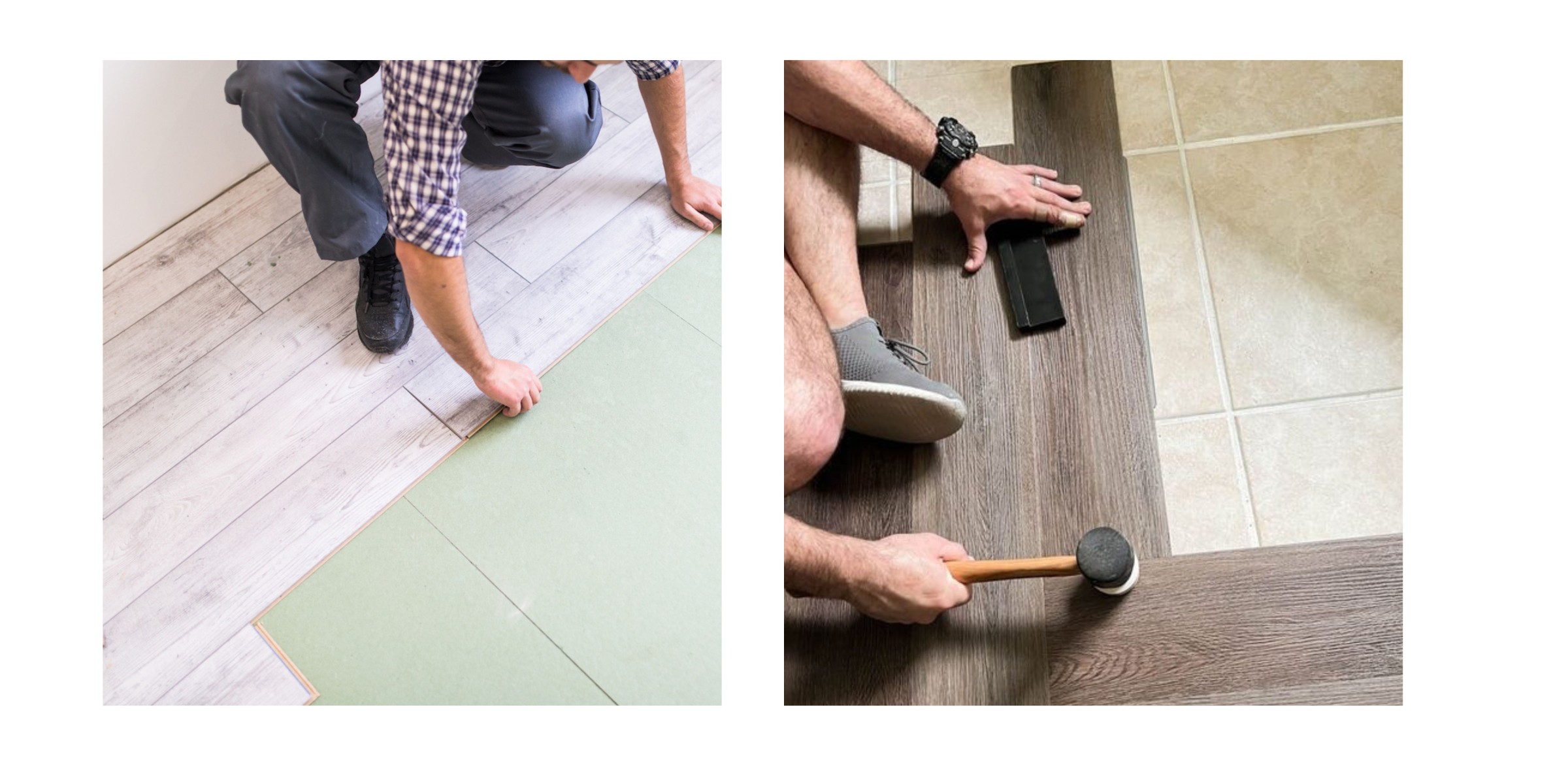
Laying a new floor over the existing one is a quick way to achieve a beautiful floor without
- a lengthy and costly renovation
- significant noise
- irritating dust
- restrictions on the renovated areas
- additional costs due to the need to hire a specialist
Basic rules for laying over an existing floor
- The existing floor must be either tiles or a firmly fixed floor (glued to the subfloor), such as old wooden parquet or linoleum…
- The existing floor must be level.
If the tiles or other floor covering are level, it is possible to lay a new floating floor on top of them. If there are unevennesses greater than 2 mm per m², there are two options:
– remove the old floor, and only then lay the new one –
level the existing floor
There are several ways to level the floor, depending on the type of floor. On a mineral substrate, such as tiles, you can pour a self-levelling screed or fill the joints with repair compound. For wooden parquet, you can sand the floor or level it using OSB boards. It is best to seek advice on the ideal way to level the floor. We do not recommend experimenting in this case.
A suitable underlay will also level out minor unevenness of up to 2 mm. If you are laying a new floor over tiles, use a PE membrane as well as the underlay to prevent moisture from the subfloor seeping into the new floor. However, if the old floor is made of wood, do not use a PE membrane. The floor must be able to breathe.
✦ Installation over the existing floor is usually carried out using the floating method, which is also recommended.
This is because, when gluing a floor, the subfloor – in our case, the old floor – must be 100 per cent level. Furthermore, the original floor may not have a suitable adhesive base for gluing. Last but not least, the cost of installation using the glued method is higher.
✦ Underfloor heating can be a problem, but it doesn’t have to be!
If you have underfloor heating beneath the original floor that you are currently using, you must pay attention to thermal resistance when choosing a new floor. The total thermal resistance of all layers above the underfloor heating should not exceed 0.15 m²K/W. In this case, it is ideal if the original floor is tiled. Tiles have the lowest thermal resistance, at 0.01–0.03 m²K/W.
You should also choose a new floor covering with low thermal resistance. The best options include composite flooring (0.02–0.06 m²K/W), followed by laminate flooring (0.07–0.09 m²K/W). Of course, these are approximate figures, as they depend on the thickness of the flooring in question.
What type of flooring can you lay on top of the existing floor?
Given the simplicity and speed of installation, composite and laminate flooring are certainly ideal. Our ranking of the best flooring options:
✦ Composite flooring:
✦ Laminate flooring:
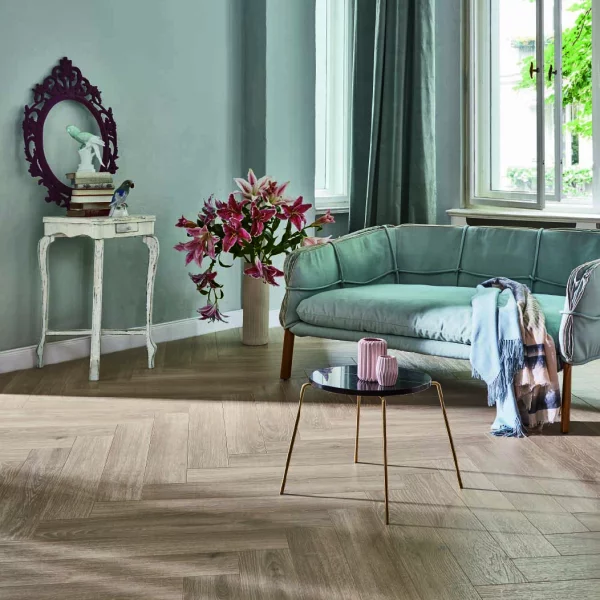
These floors do not require gluing, so you can lay them yourself without the help of a specialist. The flooring is installed using a click-lock system in a floating manner. The floors are durable, resistant to damage and, in the case of composite flooring, also resistant to moisture. They look elegant and suit any interior.
What advantages does composite flooring offer?
- It brings warmth and cosiness to any room.
- They are water-resistant – suitable for areas exposed to frequent contact with water.
- They are highly impact-resistant – making them perfect for children’s bedrooms too.
- They are thin – their maximum thickness is Afirmax for SPC 5 mm, Parador for SPC 6 mm and EGGER for GreenTec 7.5 mm. This means you can lay them over the existing floor without the risk of significantly raising the floor level.
- Suitable for underfloor heating
- They are simply beautiful!
What advantages does laminate flooring offer you:
- It comes in a truly wide range of colours and designs
- They are suitable for underfloor heating, but you need to bear in mind the floor thickness, which ranges from 7 mm to 12 mm. The thicker the new floor, the poorer the heat transfer and therefore the greater the heat loss. Naturally, this may also mean you end up paying more for your heating.
- Laminate is a classic. Functional, practical and durable.
Don’t miss the chance to give your home a fresh new look. What could be better than laying a new, trendy floor? And what’s more, you’ll spare your family the tedious process of removing the original floor. If you don’t have the patience or experience to carry out the preparatory work required before laying the flooring, get in touch with us!
 Testovací B2B článok 1
  Vážený zákazník (NÁZOV)