







The best advice on choosing the right flooring is available in person at one of our hundreds of partner shops. In this article, we’ll outline a few recommendations to help you better understand how to choose flooring.
Whether you’re choosing timber, laminate, vinyl or composite flooring, there’s always the question of why a particular floor is more expensive in one shop and cheaper in another. Flooring that looks identical at first glance, and is even very similar in terms of specifications, can often differ in price by tens of euros per m². Let’s take a look, step by step, at the different types of flooring and the factors you should focus on.
How to choose laminate flooring?
One of the most popular flooring options, not only because of its relatively lower price but also because of its durability. Laminate flooring is a reliable choice for almost every room in your home. The only exceptions are areas that require 100% water resistance.
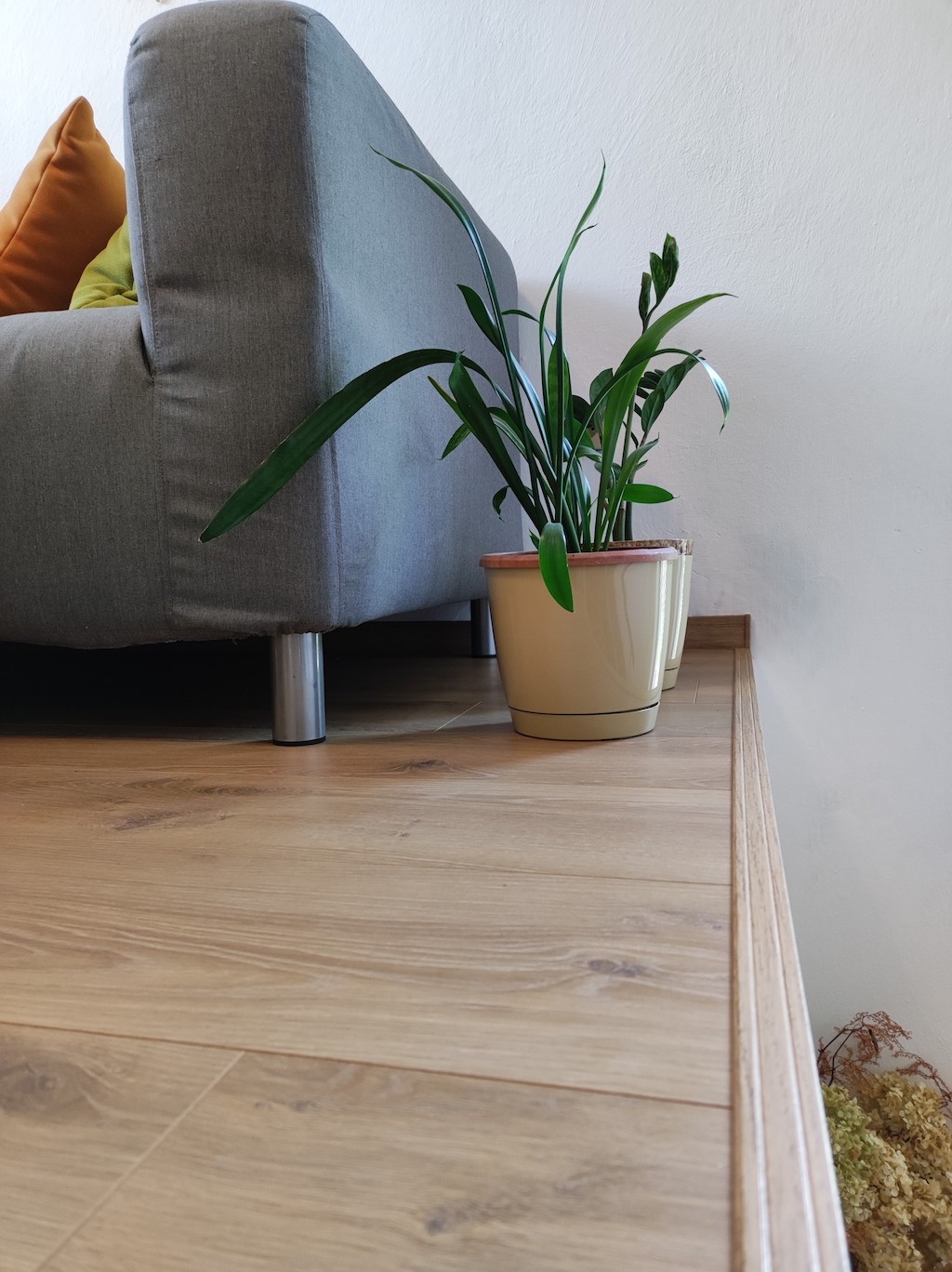
Laminate flooring differs from wooden flooring in that it is made from synthetic materials. However, this gives them certain advantages, for example in terms of durability. Laminate flooring consists of a base layer, a core layer, a decorative layer and a top wear layer. These are laminated together to form a single unit.
A single unit designed to withstand hazards such as scratches or falling objects. Of course, this is only true to a certain extent. If durability is important to you and you’re looking for a floor that can cope with moving furniture, the antics of pets or a dropped glass, filter your search with us for durability class AC5.
The
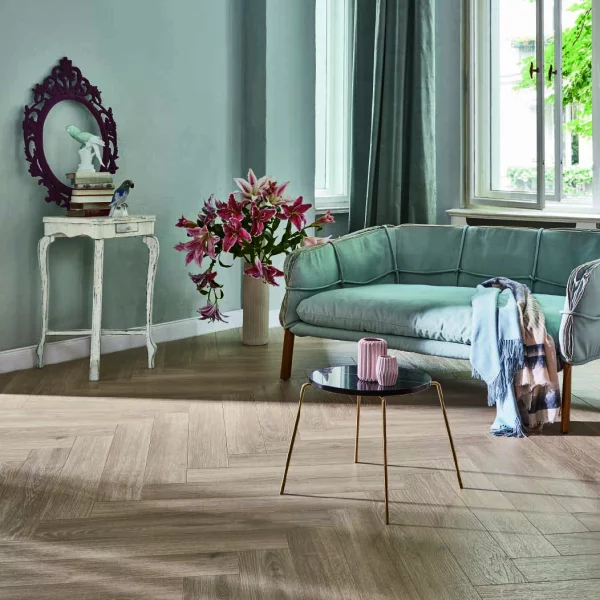
advantage of decorative paper is that laminate flooring can closely resemble its wooden counterparts or tiles in terms of design. Nowadays, you can find laminate flooring in traditional formats, but there’s also no shortage of herringbone-patterned laminates or large-format planks. We stock all these types in our range. One of the selection criteria is therefore the format. Choose it taking into account the layout of the floor plan and the arrangement of your furniture.
And what about the water resistance of laminate flooring? As the core board is made from natural materials, it follows logically that laminate flooring cannot be 100% water-resistant. Nevertheless, we do have collections that offer enhanced water resistance.
This is thanks to the impregnation of the planks’ edges. Whilst laminate flooring with enhanced water resistance won’t help you if your dishwasher overflows for several days, it can easily cope with smaller splashes of water. And these are the very features that make it worth considering for your kitchen or hallway.
What are composite floors and what advantages do they offer?
Composite flooring is a modern and popular type of flooring that combines different materials to achieve the benefits of each. These floors are created by combining different layers of materials to achieve specific properties and benefits.
SPC flooring is made from stone powder or a mixture of minerals, PVC and stabilising additives. It is strong, water-resistant and resistant to temperature changes. It is ideal for areas with high footfall.
The choice of composite flooring depends on specific requirements, such as the room’s intended use, resistance to moisture, appearance and maintenance preferences.
Choosing a wooden floor – what factors should you consider?

Wood processing
Products containing wood or wood-based composites may vary in terms of wood processing and quality. During the manufacturing process, it is certainly important to ensure the wood is properly dried to prevent surface changes or mould growth after installation.
You won’t find the price of the wood used for a particular plank anywhere. Every floor contains a different mix of wood species and varies in quality, which also affects the price at which a particular wood species is available. It is not possible to compare the price of solid wood used for a table or other piece of furniture with that of the wood used in the flooring manufacturing process.
Where does the timber come from?
Some factories purchase their timber, whilst others have their own sources. Companies are often concerned about the environment. Some flooring manufacturers therefore ensure that the timber comes from sustainable forestry. They ensure that, as well as being phthalate-free and harmless to health, the flooring can be recycled. Some of the waste can be reused, whilst some can be sent to a biomass power station. Of course, not every customer is willing to pay extra for this process and support the company’s philosophy.
Wood grading
Another important factor with regard to timber is its grading. The smoother and cleaner the timber, the more expensive it is. Wooden floors that have so-called knots and cracks are cheaper.
Joint quality in flooring
You cannot judge the quality of the joints in flooring intended for floating installation at first glance. And certainly not when you are only looking at a sample on display in the shop. Perhaps, once you have the pack of flooring at home and notice that the tongues of the so-called click joint are warped, you’ll realise that the click system is of poor quality. In the worst-case scenario, you may only realise this after installation, when the joints start to come apart and therefore do not hold together properly, particularly at the shorter joints between the planks. Some specialist flooring shops offer the option of borrowing a whole plank or purchasing a sample plank, in which case an experienced floor fitter will be able to assess the quality of the joint for you.
Surface finish – floor decor printing and protective layer
The design is the first thing that catches your eye on the floor. At first glance, it is difficult to tell what technology the manufacturers have used to apply the decorative layer to the plank. In some cases, the decor looks the same even after several years; in others, you may notice in areas subject to heavier wear that the surface layer is flaking off, indicating poor quality.
Amount of material used
The amount of material used also applies to the wear layer. The thicker it is, the higher the quality of the flooring. This information is visible and readily available in the technical data sheet. It is more difficult to ascertain the amount of high-quality material used in the actual composition of the plank itself. Composite flooring is very popular these days, but companies often keep the ratio of materials used a secret as part of their manufacturing process. In such cases, you can probably only rely on reviews or the brand’s reputation. With vinyl flooring, too, the quality of the material – and, above all, its safety – is very important.
Quantity of goods purchased
The price may, of course, also depend on the quantity purchased. If you buy in larger quantities, specialist flooring retailers in particular will often be able to offer you a better price.
Plank width
Wider floor planks are very much in vogue these days. This type of flooring will lend your home an air of luxury. Your interior will take on an exceptionally spacious look. However, large-format planks are more difficult to manufacture. This means you’ll pay extra for the larger size.
Integrated underlay
Some floors already come with an integrated underlay. This means there are no additional costs for purchasing a separate underlay, either at the time of purchase or during installation. The underlay can be made of cork, polymer or other materials. This is also a difference you can see on the planks with the naked eye.
Certificates
Flooring manufacturers often promote their products as being safe, eco-friendly, water-resistant and possessing other important properties. But be careful: some may make these claims without having any verified evidence to back them up. Tests are carried out on these aspects, and quality seals and certificates are issued. And, of course, these certificates come at a cost, which is reflected in the final price of the flooring. The question is whether you want to be sure that the flooring in question is safe and that all its properties are confirmed by a certificate.
Read also >> The most commonly used and best-known certificates found on flooring
So what should you base your decision on when buying flooring?
It’s important to ask yourself whether you’re willing to pay extra for the quality and benefits associated with the manufacturing process, or whether you’re simply looking for a cheap floor. Also, whether you prefer natural flooring or are looking for something more durable. A reputable flooring retailer should provide you with all the available information about the flooring. Unfortunately, in large department stores with a diverse range of products, this isn’t always possible. Whilst they do have a relatively wide selection and are open at weekends, they provide little information about what they are actually selling. We recommend visiting specialist flooring shops, where the staff are professionally trained and focus solely on floor coverings or a similar range of related products. Of course, the level of customer care and guidance throughout the purchasing process is also different.
Read also >> 15 most common questions you’ll face when buying new flooring
 Vážený zákazník (NÁZOV)
 Testovací B2B článok 1